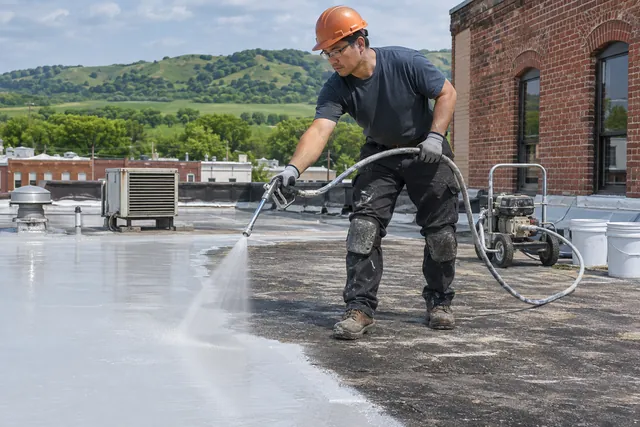
Silicone Roof Coating
Gutters and low sections that hold meltwater get silicone, which handles standing water after a thaw.
Silicone roof coating details
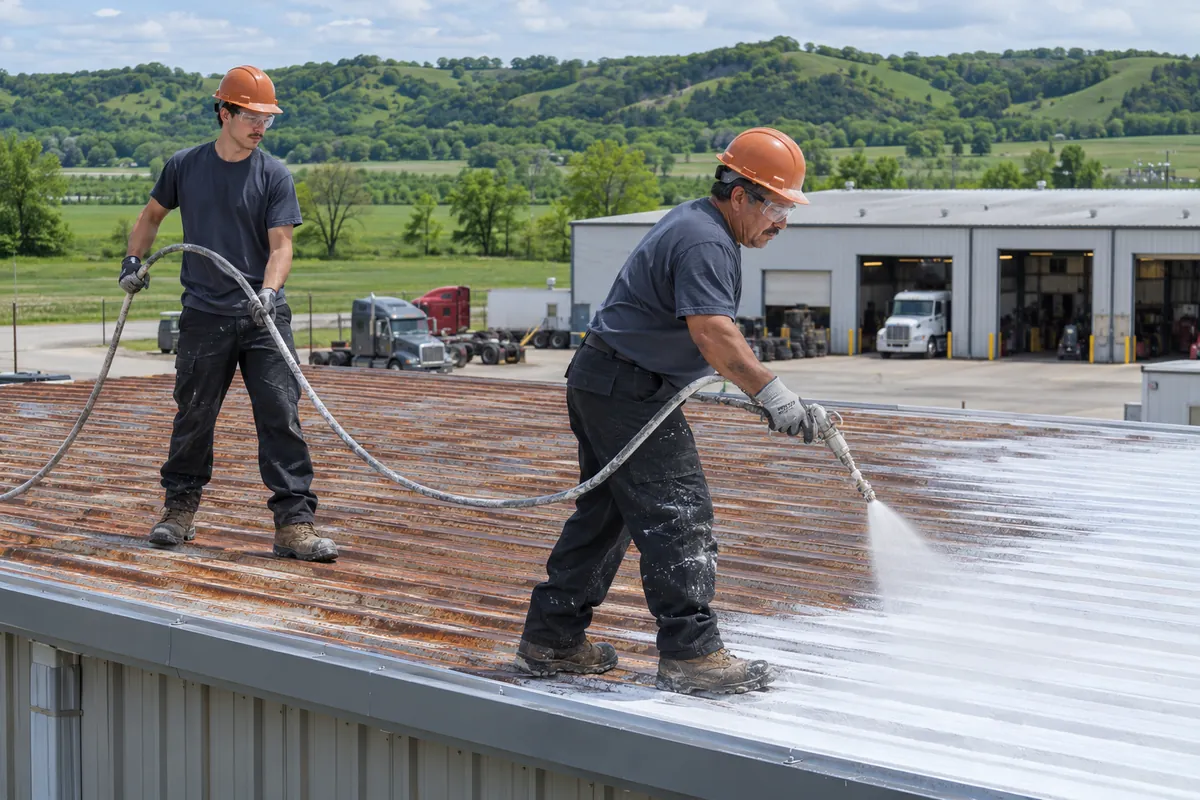
As a Missouri Valley metal roof coating contractor, we coat ag supply buildings, shops, and storage roofs during dry stretches so every coat cures fully.
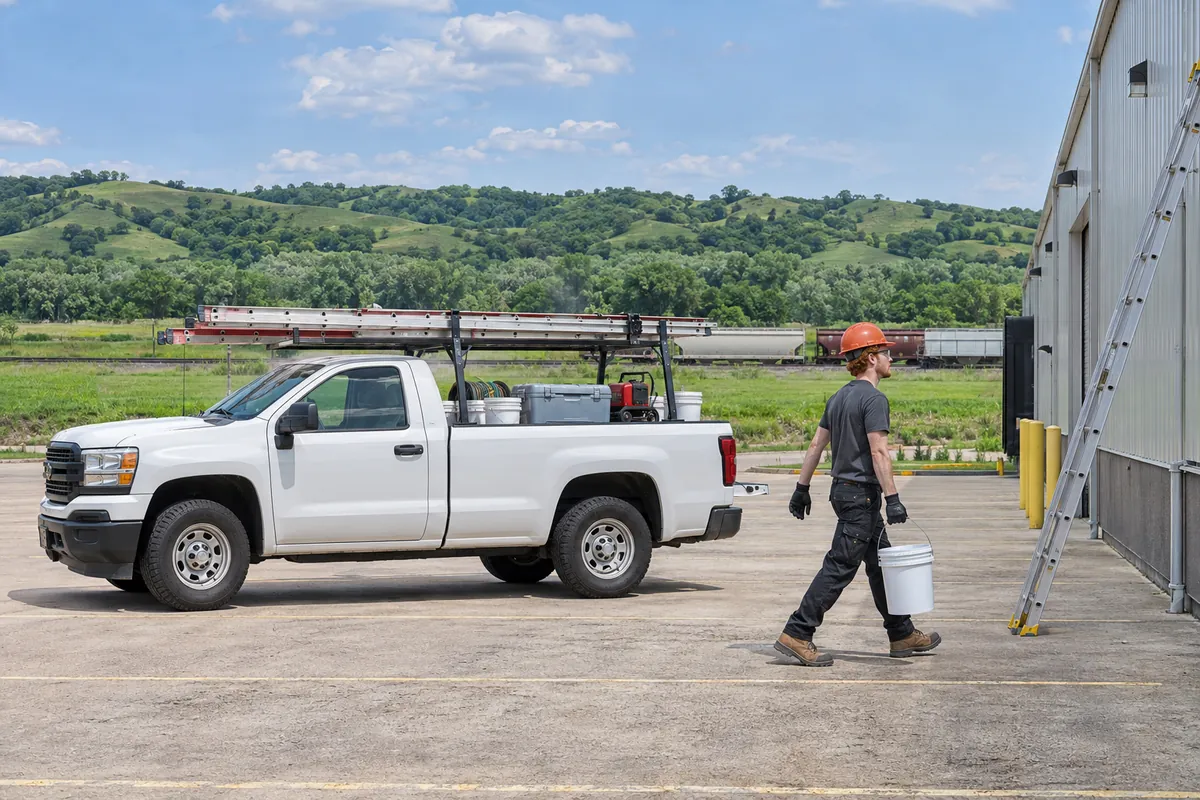
Weather decides more on a coating job than most owners expect. Missouri Valley metal roof coating gets booked for dry, mild stretches, because rain, heavy dew, or a freezing night can wash off or stall a fresh coat before it cures.
Prep work like screw replacement and gutter repair can happen in cooler weather, so the roof is ready when the forecast opens up.
Supply buildings and storage roofs leak where steel meets steel. Here is what we trace on these roofs.
Bags that come out damp after rain often sit under a rusted lap near the ridge.
Laps near the ridge collect condensation and rust from the inside, then open as the panels move.
Rust streaks on the office wall of a supply building usually start at a failed eave gutter.
Gutter seams rust through first, dumping water behind the wall panels.
Drips that appear when snow melts, without rain, point to laps that hold meltwater against the steel.
Screws along the eaves loosen first, since snow and ice load that edge every winter.
Water running down the inside of a loading door frame usually comes off a cracked header flashing.
Flashing over loading doors bends and cracks as the steel moves, so we reseal or replace it before coating.
A coat that cures fully pays off for everyone tied to the building. Here is how.
Missouri Valley storage and supply roofs usually fit one of these systems, chosen partly by the season.
Gutters and low sections that hold meltwater get silicone, which handles standing water after a thaw.
Silicone roof coating details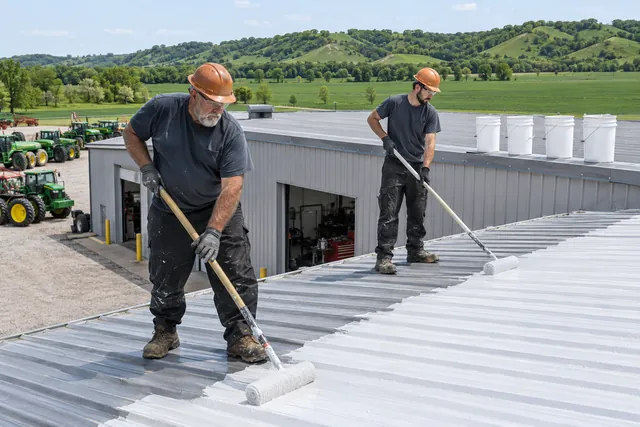
Steeper supply-building roofs take acrylic, scheduled for warm, dry stretches so it cures before dew.
Acrylic roof coating details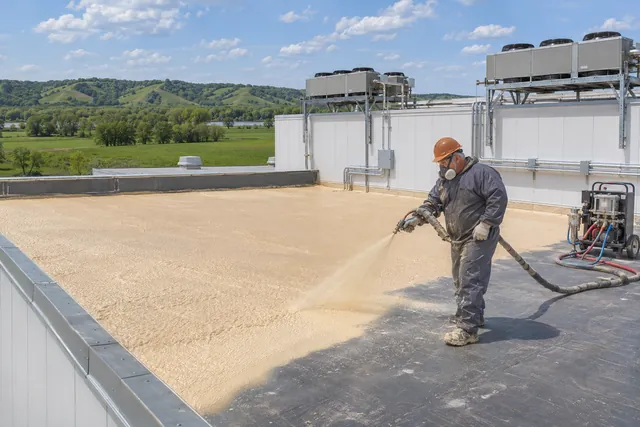
Storage buildings that need steady temperatures can get foam over the steel and a protective coat.
Spray foam roofing detailsBook your inspection early, and we will do the prep work first so your roof is ready when the dry weather comes.
We walk the Missouri Valley roof, mark rusted ridge laps, loose eave screws, and gutter seams, and pull cores where water has come in.
Gutters, screws, and failed panels get fixed during cooler weeks, ahead of the coating window.
Dry days with mild nights get picked for each coat, since acrylic needs both to cure.
The roof gets washed, rust gets primed, and laps get fabric right before coating starts.
Each coat goes on at full thickness, with a cure check before the next one follows.
Prep can happen in most weather. Coating waits for the right forecast.
Not in Missouri Valley? We also coat roofs in Council Bluffs and four nearby towns. For anywhere else, Call us or send us a message.
Council Bluffs is where most of our coating jobs are, from small shops to large warehouses. Each roof gets the same panel-by-panel walk.
Council Bluffs metal roof coatingMetal shop buildings and machine sheds are the usual Glenwood roofs we coat. Rusted laps get fabric before the topcoat.
Glenwood metal roof coatingRetail and service roofs in Carter Lake get coated in sections around business hours. Customers keep using the front lot.
Carter Lake metal roof coatingAvoca storage buildings and shops get a coating matched to their pitch. Steeper roofs often take acrylic.
Avoca metal roof coatingLogan buildings with aging panels get a close look at framing and laps. Firm panels get coated in place.
Logan metal roof coatingCost, timing, and coverage for Missouri Valley buildings.
Coating plans at about $2.50 to $4 per square foot, and replacement at about $5 to $8. Ag supply buildings, shops, and storage roofs in Missouri Valley differ a lot in rust and screw condition, and travel, access, and the number of coats shape the final cost too.
Call UsThe ballpark starts from the measured square footage. From there, rust depth at the laps, the number of screws to replace, gutter repairs, and how many coats the system needs move the price up or down inside the coating range.
Yes for the inspection and prep work. Coating itself waits for dry days with mild nights, which usually means late spring or later for acrylic. Silicone can go on in a wider range of weather.
We coat ag supply and storage roofs around Missouri Valley, priming rust, sealing ridge laps, and repairing gutters before the topcoat. Each coat gets booked for a forecast that lets it cure.
Some of it can. Screw replacement, panel swaps, and gutter repairs often go ahead in cold, dry weather. Washing, priming, and coating wait for warmer stretches, since wet or frozen steel keeps primer and coating from gripping.
Acrylic is water-based, so rain or heavy dew before it cures can wash it off, and nights near freezing stop the cure. That leaves a thin, weak layer that peels early, which is why we wait for the right window.
Book the inspection now, and we will have your Missouri Valley roof prepped and ready for the next dry stretch.