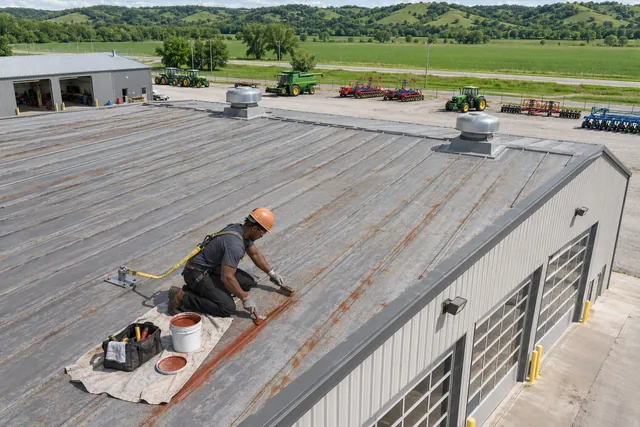
Commercial Metal Roof Coating
- Best On
- Exposed-fastener steel panels with rust at laps
- Typical Work
- Rust priming, screw replacement, seam fabric, topcoat
- Watch For
- Rust-through panels that need swapping first

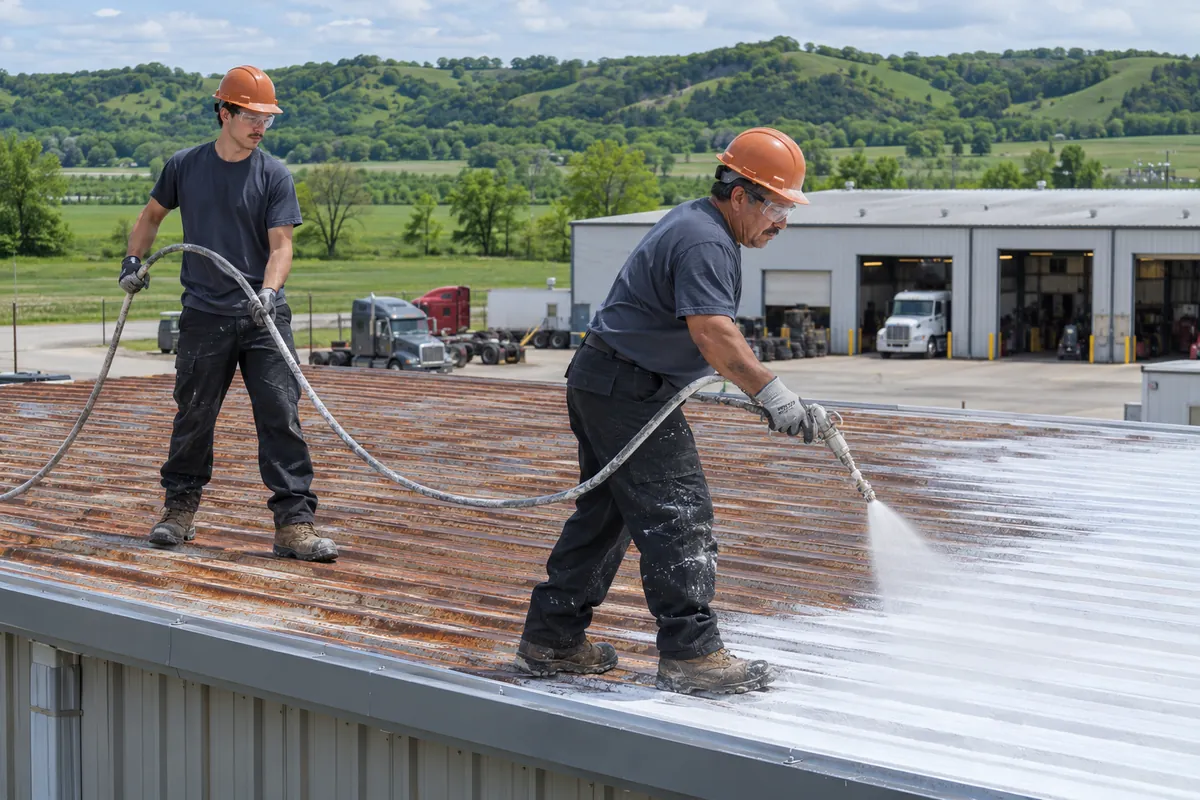
As a Council Bluffs metal roof coating contractor, we clean, prime, seal, and coat commercial metal roofs while your building stays open.
Council Bluffs metal roof coating usually starts with something you notice inside. Here is how the most common symptoms trace back to the roof.
Water spotting the floor in a straight row usually follows the purlin under a leaking panel lap.
Panel laps loosen as steel expands and contracts, and the sealant tape inside them dries out and lets water wick in.
Sagging or stained vinyl facing on the ceiling means water has been sitting on the insulation for a while.
Screws work loose over many freeze-thaw seasons, and the rubber washers under their heads crack and stop sealing.
Condensation dripping from the deck on cold mornings looks like a leak but comes from warm, damp air inside.
Rust starts around screw heads and cut panel edges first, then spreads across the panel face if nobody primes it.
Orange flakes on racking or pallets point to corrosion on the underside of the panels above.
Leaves and grit build up in box gutters, hold water against the steel, and rust it from the inside edge out.
We walk every panel line, mark loose screws and open laps, and core-check the insulation where water has been getting in.
Stripped screws get oversized replacements, rusted-through panels get swapped, and torn flashing around curbs gets rebuilt.
A power wash strips chalk and grit, then every rusted area and screw head gets a rust-inhibiting primer.
Laps, ridge caps, and fastener rows get fabric and mastic so the topcoat spans tight, reinforced joints.
The silicone or acrylic topcoat goes on at the thickness the system calls for, with mil readings checked as we go.
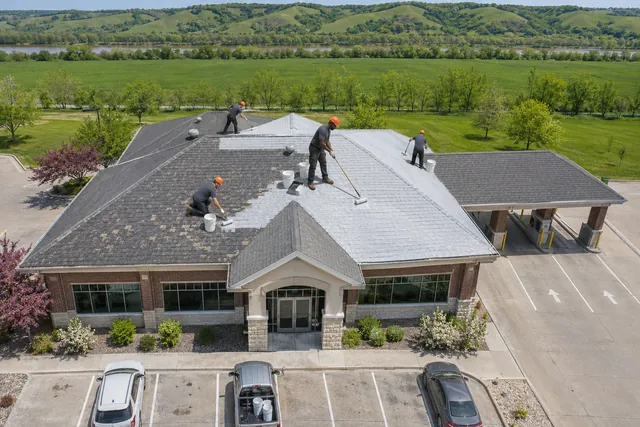
Five steps, from the first roof walk to the final coat, with your building open the whole time.
A coated roof helps more than the owner who pays for it. Here is who sees the change on a typical warehouse or shop.
If a lap seam or a skylight curb is letting water onto product right now, call us and we will look at that section first.
Five systems, each matched to a different kind of roof. Compare where each one works and what we check first.
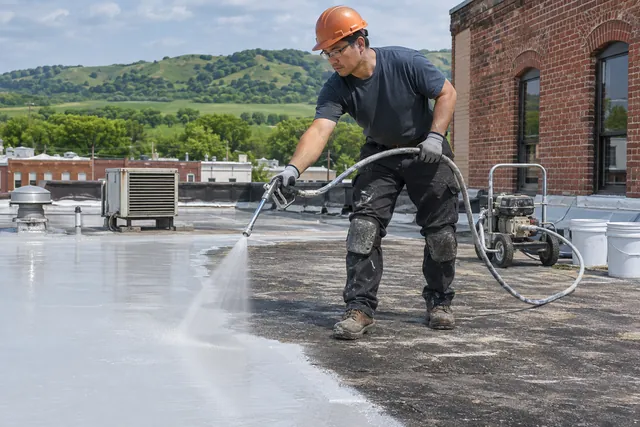
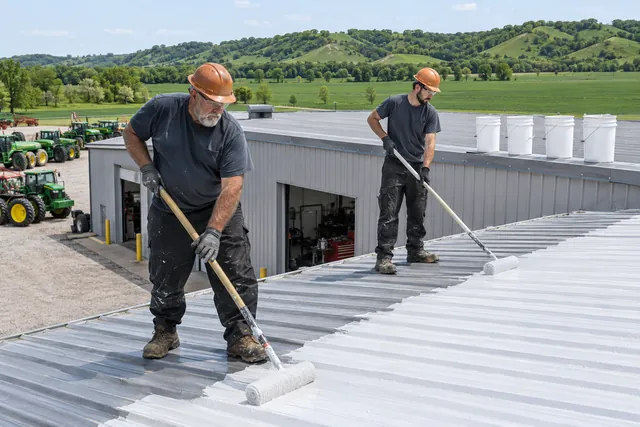
The panels decide this. We walk the roof, core-check the insulation, and then tell you which side of this card your building sits on.
Not sure your building falls inside our area? Call us or send us a message. We coat commercial metal roofs in Glenwood, Carter Lake, Missouri Valley, Avoca, and Logan, plus Council Bluffs itself.
Shop buildings, equipment sheds, and storage barns often share one Glenwood lot, so we walk every roof on the property in one visit. Each one gets its own rust and fastener check before any coating goes down.
Glenwood metal roof coatingCarter Lake service shops and small warehouses keep their doors open while we coat, so we plan sections around the hours people work inside. Loud prep work like power washing gets scheduled with the owner first.
Carter Lake metal roof coatingAg supply buildings and storage roofs in Missouri Valley get coated during dry, mild stretches, because a cold dew can ruin a fresh coat. We watch the forecast and book each coat for a dry window.
Missouri Valley metal roof coatingFarm buildings and equipment dealer shops around Avoca tend to show rusted screw heads and open lap seams after years of weather. Those get primed, refastened, and sealed before the topcoat.
Avoca metal roof coatingOlder panels on Logan commercial buildings get a close look for hail dents, chipped finish, and rust-through. Solid panels get coated; failed ones get swapped first.
Logan metal roof coatingShort answers to what owners ask most before a coating job starts.
Yes, as long as the steel is still solid under the rust. We knock off loose scale, prime every rusted spot and screw head, and seal the laps before the topcoat. Any panel that is rusted through or flexes underfoot gets replaced first, since a coating covers rust but adds no strength to thin steel.
Call UsIt comes down to how many mils go on, which coating is used, and how the roof is looked after. Coating makers rate their systems by thickness, often in the 10 to 20 year range. Standing water at gutters, hail, and heavy foot traffic wear it faster, and a timely recoat resets the clock.
Coating is the better fit when the panels are firm and the leaks come from laps, screws, and surface rust. Replacement wins when steel is rusted through, the framing has moved, or the insulation is soaked. We make that call only after walking each panel line and pulling insulation cores.
Because the warehouse never has to stop. The coating goes over the panels already on the building, so stored goods stay covered and trucks keep using the docks. It also seals the long rows of exposed screws that cause most warehouse leaks, and keeps old steel out of the landfill.
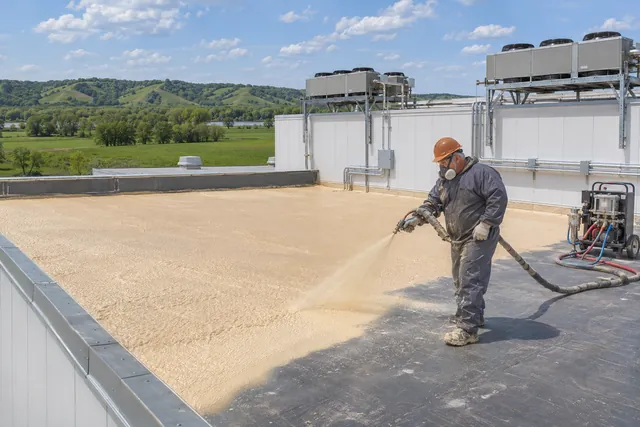
Most cold storage roofs end up with silicone or spray foam. Silicone fits steel that is in good shape and mainly needs leaks sealed and a reflective finish. Foam fits when the building also needs more insulation above the panels. Interior temperature, condensation history, and panel condition steer the choice.
Tell us about the roof and we will set up an inspection, then give you a ballpark built from your square footage.