Silicone Roof Coating
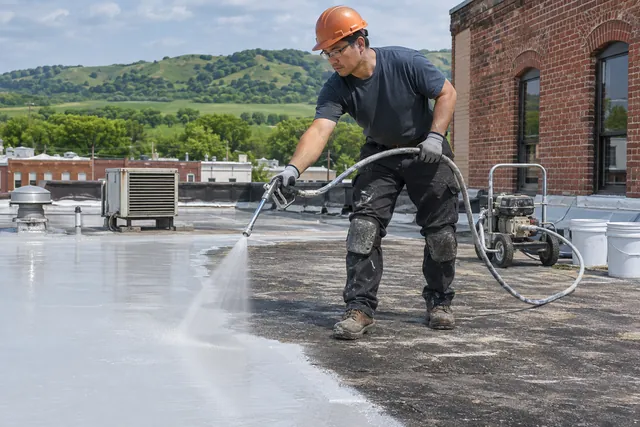
Flat sections and gutters where water sits need silicone, which holds up under ponding that would soften acrylic.
Council Bluffs silicone roof coating
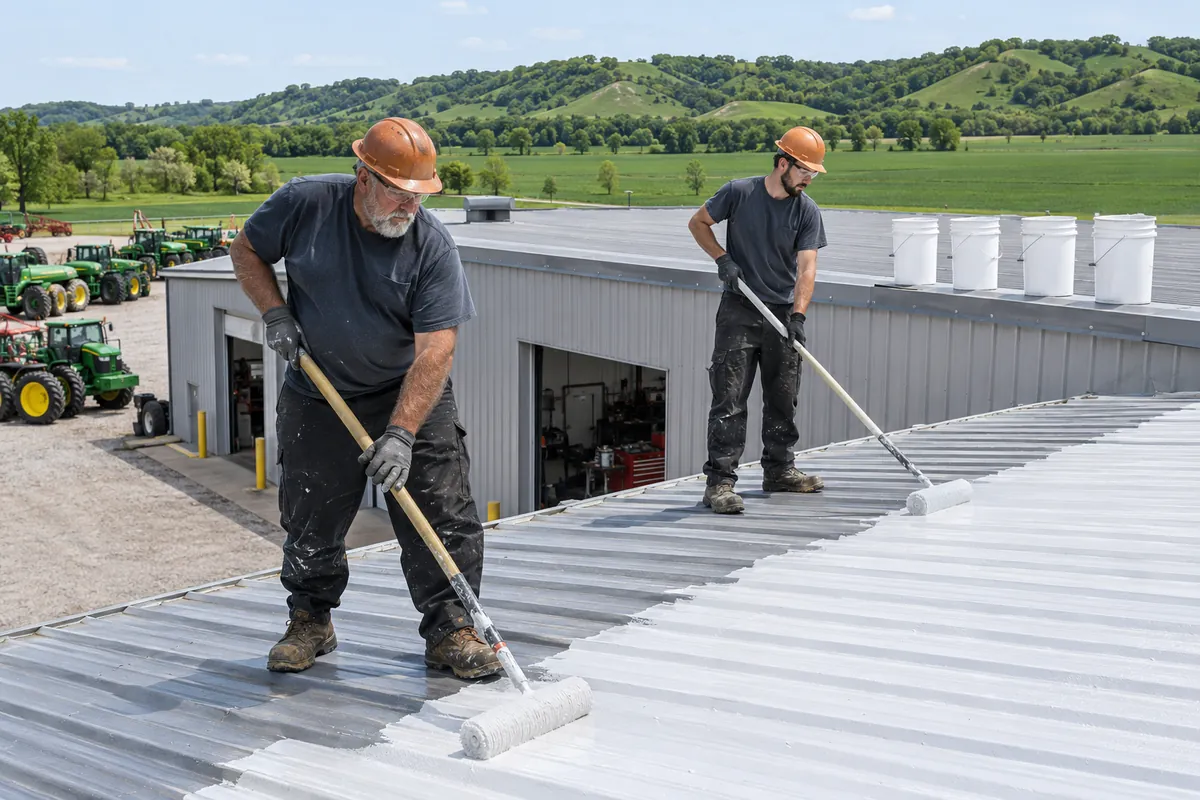
As a Council Bluffs acrylic roof coating contractor, we prime sloped steel, reinforce the laps, and roll or spray acrylic during dry, mild weather.
Council Bluffs acrylic roof coating needs a roof that sheds water. These cards compare a good acrylic roof with one that should go to silicone.
Sloped steel roofs fail at their joints and edges first. Here is what we look for when something shows inside.
Rust-colored streaks on the inside face of the eave wall usually come from failed eave closures or a rusted gutter seam.
Hanging gutters collect grit and hold water at the seams, and the steel rusts from the inside lip outward.
Offices and mezzanines under a dark steel roof get hot in summer because the panels soak up sun all afternoon.
Factory paint chalks and thins after years in the sun, leaving bare spots that rust at the ribs.
Water that only shows up after storms with high wind points to the ends of panels and the trim at the gable.
Rake trim works loose in wind, opening the panel ends, so we refasten and seal it before the acrylic goes on.
Acrylic goes on in a few ways, depending on the panel profile and how much fabric the joints need.
| Option | Best For | What Goes On | Notes |
|---|---|---|---|
| Two-coat acrylic | Pitched steel that drains well | Primer, base coat, contrasting topcoat | Colors show any missed spots |
| Acrylic with seam fabric | Laps and ridge caps that move | Fabric in the base coat at joints | Joints carry extra thickness |
| Acrylic plus silicone spots | Mostly sloped roofs with low gutters | Acrylic field, silicone in gutters | Each coating where it works best |
Acrylic suits roofs that shed water and see a lot of sun. Here is who gains when it goes on.
Acrylic needs dry, mild days to cure. Booking an inspection early gets your roof on the schedule before cool nights arrive.
We check slope and drainage, mark loose screws and rusty laps, and pull cores where any water has been coming through.
Rake trim, eave closures, and rusted gutter seams get refastened or replaced before any coating goes on.
A power wash takes off chalk and dirt, then rust primer goes on every bare rib, screw head, and cut edge.
The first acrylic coat goes on with fabric bedded at laps and ridge caps, during a dry, mild forecast.
A second acrylic coat in a different color goes on once the base has cured, so any thin spot stands out.
Weather sets the pace on an acrylic job. Prep happens first so each coat can go on during a dry stretch.
Acrylic covers sloped steel well. These systems cover the rest of the roof types we coat.
Flat sections and gutters where water sits need silicone, which holds up under ponding that would soften acrylic.
Council Bluffs silicone roof coating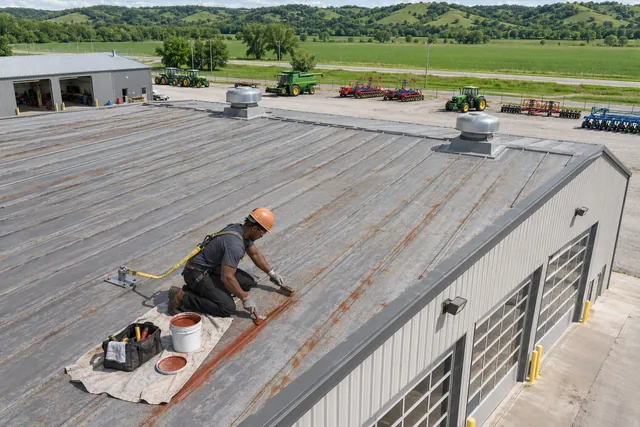
Heavily rusted steel roofs need the full metal restoration first, with new screws and reinforced laps.
Council Bluffs commercial metal roof coating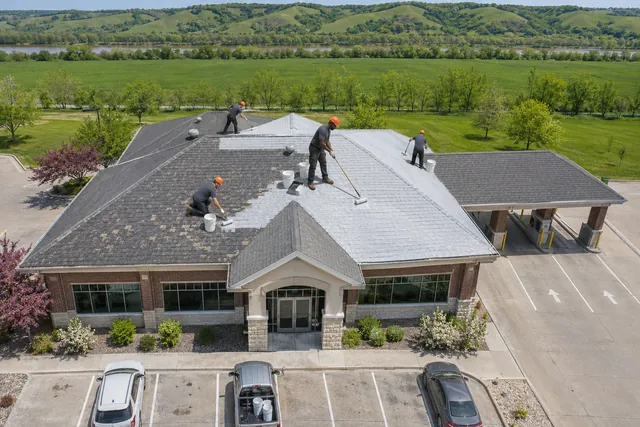
Mansard fronts and sloped shingle roofs on offices can take a coating once loose tabs are replaced.
Council Bluffs shingle roof coatingWhat owners ask about acrylic life, coats, cost, and timing.
Acrylic life follows the mils applied, how well the roof drains, and how often it gets recoated. Coating makers rate acrylic systems for about 10 years or more at standard thickness. Standing water, a freeze before the coat cures, and heavy foot traffic all shorten it, and regular recoats keep it working.
Call UsYes, when the panels have enough pitch to shed water. We wash the steel, prime the rusty spots, and seal the laps and screws first. Any flat or sagging part of the roof that holds water after rain gets silicone in those spots instead.
Two is standard: a base coat and a topcoat, often in different colors so a missed patch stands out. Together they build the dry film thickness acrylic needs. Each coat waits for dry weather above the maker's minimum temperature, which matters in cool spring and fall weeks.
Acrylic jobs plan inside the coating range of about $2.50 to $4 per square foot. Rust treatment, lap and screw work, roof size, access, and the number of coats decide where a roof lands. The material itself often costs less per gallon than silicone, but prep drives most of the price.
During dry, mild stretches, mostly from late spring to early fall. Acrylic is water-based, so rain or heavy dew before it cures can wash it away, and nights near freezing stop the cure. We follow the forecast and book each coat for a dry window.
Book the inspection now, and we will line up your acrylic coats for the next dry stretch.