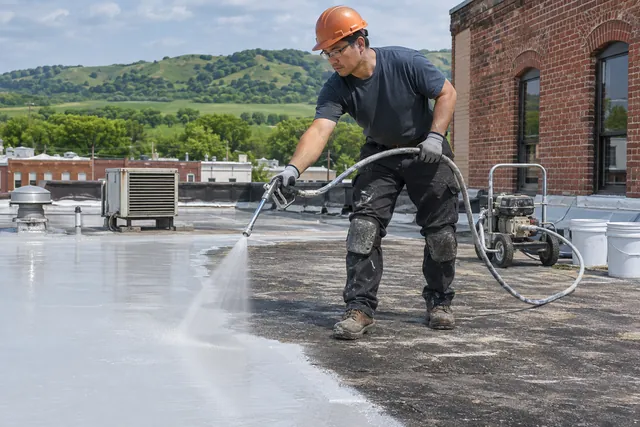
Silicone Roof Coating
Many foam roofs get silicone as their topcoat, and silicone alone fits roofs that need sealing but no insulation.
Council Bluffs silicone roof coating
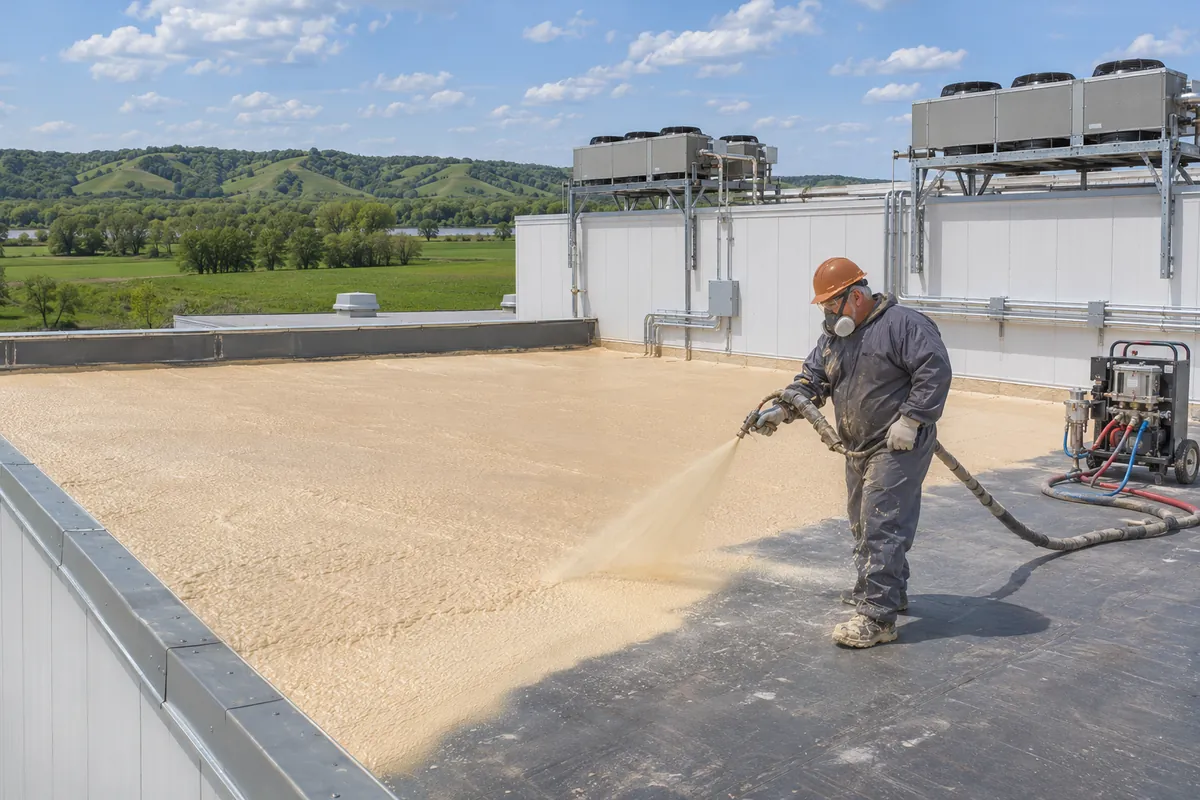
As a Council Bluffs spray foam roofing contractor, we spray foam over clean, dry decks and steel panels, then protect it with a silicone or acrylic topcoat.
Council Bluffs spray foam roofing fits buildings that need insulation as well as a new surface. These cards show when foam fits and when it waits.
Foam solves leaks and heat loss at the same time. Here is what we see inside before foam goes on.
Plants and shops with steel roofs and thin insulation lose heat through the deck all winter.
Ribbed steel panels with only thin blanket insulation leave the deck cold, so foam fills those ribs and adds a solid layer.
Condensation forms when warm, damp plant air meets cold steel, then drips onto equipment below.
Older foam roofs with a worn, chalky topcoat get cleaned, patched, and recoated before water reaches the foam.
Leaks that move around the building after storms often follow screw rows and laps across a large steel roof.
Foam covers every screw head and lap in one continuous layer, so the fasteners stop being leak points.
Foam jobs differ in how much foam goes on and which topcoat protects it.
| Option | Best For | What Goes On | Notes |
|---|---|---|---|
| Foam over steel panels | Exposed-fastener metal roofs | Primer, foam to fill ribs, topcoat | Covers every screw head |
| Foam over old membrane | Dry built-up or single-ply roofs | Foam layer, then silicone or acrylic | Can build slope to drains |
| Foam recoat | Older foam with a worn topcoat | Clean, patch, fresh topcoat | Keeps sun off the foam |
Foam changes how a building holds heat as well as how it sheds water. Here is who sees that change.
If water shows up on cold mornings with no rain, it may be condensation. Call, and we will check whether foam fits your building.
We check deck strength, drains, and insulation cores, and confirm the structure can carry added weight under the county's snow load.
Wet insulation gets removed, loose panels get refastened, and drains get reset so the foam starts on a dry, firm base.
Screens go up near parking and doors, and spraying waits for calm wind so foam stays on the roof.
Foam fills the panel ribs or covers the old membrane in passes, building slope toward drains where needed.
Silicone or acrylic goes over the foam soon after it is sprayed, since sunlight breaks down bare foam.
Foam needs dry steel and calm weather. Here is the order on the roof.
Foam pairs with these systems, or replaces them on buildings that need insulation.
Many foam roofs get silicone as their topcoat, and silicone alone fits roofs that need sealing but no insulation.
Council Bluffs silicone roof coating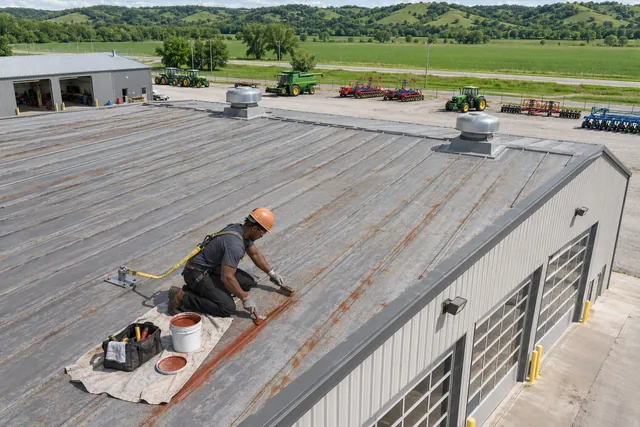
Steel roofs with good insulation but leaking laps and rust need the metal coating service instead of foam.
Council Bluffs commercial metal roof coating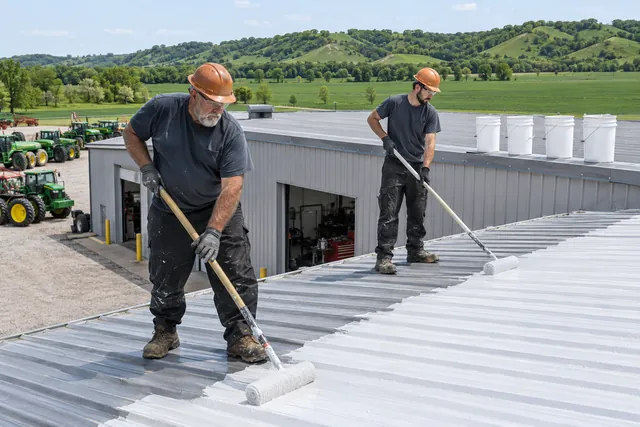
Foam roofs on slopes that drain quickly can take acrylic as the protective topcoat.
Council Bluffs acrylic roof coatingLife, recoats, cost, and structure questions about foam roofs.
As long as its topcoat is kept up. Foam holds up well while it stays covered, and sunlight is what breaks it down when the coat wears away. Most of a foam roof's service life comes from recoating on schedule and patching hail or foot-traffic punctures before water reaches the foam.
Call UsWhen the topcoat wears thin, chalks heavily, or shows bare foam. We look closely at walking paths, around rooftop units, and at hail strikes. A recoat means washing the surface, patching any damaged foam, and spraying a fresh silicone or acrylic coat over the existing system.
On the plus side, foam adds continuous insulation, covers every screw and lap, and can build slope toward drains. On the other side, it needs dry weather to install, a regular topcoat schedule, and care with foot traffic. Overspray near parking lots also takes planning.
Foam jobs plan against two ranges: about $2.50 to $4 per square foot for coating-level work and about $5 to $8 for replacement-level work. Foam thickness, the topcoat, any wet insulation removal, roof size, access, and the number of penetrations move the price.
Yes, when the steel and framing are in good shape. We clean and prime the panels, fill the ribs with foam, and finish with a protective coat. Pottawattamie County design criteria list a 30 psf ground snow load, so we check the structure before adding weight.
It often does. Drips on cold mornings come from warm, damp air inside meeting cold steel. Foam on top of the panels keeps the deck warmer, which cuts down on that condensation. We still check for real leaks at laps and curbs, since both problems can show up together.
Book an inspection, and we will check the deck, the drains, and the insulation before recommending foam.